You Won’t Believe What I Found in Koh Lipe’s Hidden Art Scene
Koh Lipe isn’t just white sand and crystal water—there’s a quiet cultural heartbeat beneath the surface. I went searching for more than beaches and stumbled upon something unexpected: vibrant local art, handcrafted spirit, and island traditions alive in the details. From carved wooden signs to fabric stamped with ocean stories, culture here isn’t performed—it’s lived. This is exploration that goes deeper than the map. Travelers often arrive expecting paradise framed by turquoise waves and powdery shores, but what they sometimes miss is the deeper rhythm—the way life unfolds in quiet gestures, in hand-stitched patterns, in the murals painted not for fame, but for memory. Koh Lipe offers more than escape; it invites participation in a living culture, where creativity flows as naturally as the tide.
First Impressions: Beyond the Postcard Paradise
The journey to Koh Lipe begins with a sense of transition. Stepping off the speedboat from Langkawi, the warm air wraps around you like a familiar embrace. Sunrise Beach greets visitors with its soft, ivory sand and gently lapping waves, but it’s the details just beyond the shoreline that begin to tell a different story. Unlike many tropical destinations transformed by mass tourism, Koh Lipe maintains a delicate balance. There are no towering hotels, no neon-lit streets, and no concrete sprawl. Instead, wooden walkways connect family-run bungalows, and coconut palms sway in the breeze, their trunks carved slightly by time and tide.
What struck me first was not the absence of development, but the presence of intention. Locals move with a quiet pride, greeting guests with warm smiles and gentle nods. Children play barefoot near open-air kitchens, where the scent of lemongrass and grilled fish fills the air. And then, almost subtly, the art begins to appear. A hand-painted sign for a seafood stall, its letters flowing like waves. A woven fish trap hanging outside a fisherman’s home, its pattern intricate and functional. Fabric banners fluttering above a small shop, each one stamped with repeating motifs of sea turtles and coral branches.
These are not souvenirs made for sale; they are expressions of daily life. The island’s aesthetic is not curated for Instagram—it emerges naturally from the rhythm of island living. Even the lampposts along Walking Street are wrapped in hand-dyed cloth, changing colors with the seasons. There’s a sense that beauty here is not something added, but something inherent—woven into the way people build, cook, and decorate their world. This first glimpse suggests that Koh Lipe’s identity runs deeper than its beaches. It is a place where culture is not preserved behind glass, but lived in the open air.
The Pulse of Local Craft: Where Tradition Meets Daily Life
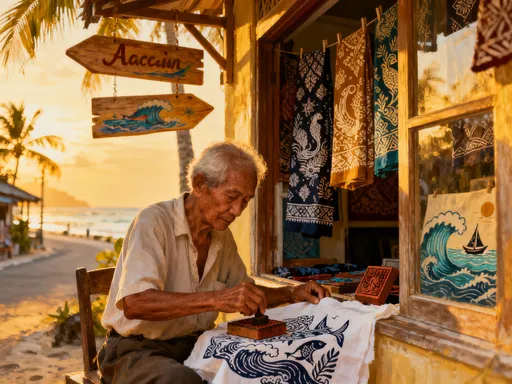
As I wandered deeper into the island’s central lanes, I began to notice a consistent thread: the persistence of traditional Malay craftsmanship. In homes and small workshops, artisans continue to practice skills passed down through generations. One of the most striking forms is batik, a method of wax-resist dyeing that produces richly patterned textiles. But here, the designs are not generic tourist motifs—they tell stories. A woman named Amina, who has lived on Koh Lipe for over fifty years, welcomed me into her courtyard where she was working on a new piece. The fabric depicted a scene of fishermen hauling in a net beneath a crescent moon, a moment she said happens every dry season.
She explained that each symbol has meaning: the waves represent resilience, the fish stand for abundance, and the birds in flight signify messages from ancestors. Her tools are simple—a copper stamp, beeswax, and natural dyes made from turmeric, indigo, and mangrove bark. She doesn’t sell her work in markets. Instead, she gifts it to family during weddings or religious holidays. “It’s not about money,” she said. “It’s about keeping the memory alive.” When I asked if tourism had changed her practice, she smiled. “Some visitors ask to learn. I teach them, slowly. It makes me happy that others care.”
Other crafts follow the same quiet dedication. Wooden carvings—often of boats, sea creatures, or floral patterns—are used as house decorations or functional items like spoons and bowls. These are not mass-produced; each piece is shaped by hand, sometimes taking days to complete. I watched an elderly craftsman named Hassan sand a small wooden dolphin, its curves smooth and lifelike. He told me he learned from his father, who learned from his. “We don’t write it down,” he said. “We do it until it’s in the hands.”
What makes these traditions endure is not commercial demand, but cultural continuity. The younger generation still learns these skills, not in formal schools, but through observation and practice. Some families run small shops where they display both crafts and photographs of elders who once practiced the same art. There’s a deep respect for lineage, and an understanding that these objects carry more than aesthetic value—they carry identity.
Street Art with a Soul: Murals That Tell Real Stories
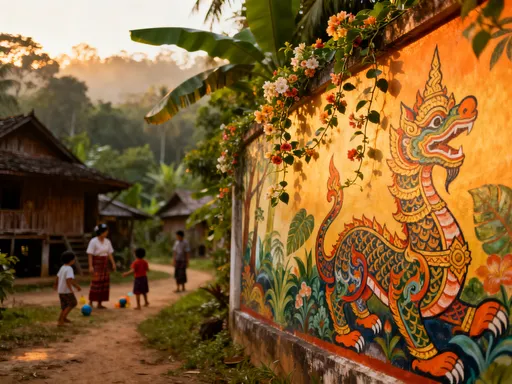
While many tourist destinations feature street art as a form of urban decoration, Koh Lipe’s murals feel different. They are not loud or rebellious, but contemplative and rooted in community life. I first noticed them on the wooden shutters of closed shops during the midday heat. One depicted a fisherman mending his net, his face lined with years of sun and salt. Another showed a coral reef teeming with life, contrasted with a smaller panel of bleached, broken coral—an unspoken message about environmental change.
These works are often created by local youth, some as young as fourteen, who participate in informal art workshops organized by a community center near Pattaya Beach. There’s no formal curriculum, no pressure to produce sellable art. Instead, the focus is on storytelling. A young artist named Nat, who helped paint a mural of a traditional long-tail boat, explained, “We paint what we see every day. Not what we think tourists want.” The mural includes not just the boat, but the hands of the builder, the tools on the ground, and the reflection of the sky in the water. It’s a tribute to craftsmanship and patience.
Themes are consistently grounded in island life: children playing sepak takraw on the sand, women preparing food for a temple offering, the changing phases of the moon that guide fishing schedules. One particularly moving piece covers the side of a community hall. It shows a timeline of Koh Lipe—old black-and-white photographs painted alongside modern scenes, connecting past and present. At the center is a tree with deep roots, its branches spreading over the island.
What’s remarkable is that these murals are not commissioned by businesses or the government. They emerge from collective effort, often painted during quiet months when tourism slows. There’s no signature, no social media tag. They exist simply because someone felt the story needed to be told. This authenticity makes them more powerful than any gallery piece. They are not art for art’s sake, but art for memory’s sake.
Temples and Totems: Spiritual Expression in Simple Forms
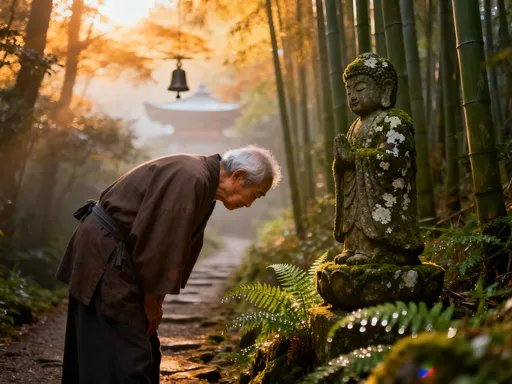
Nestled at the edge of the forest, away from the main beaches, stands Koh Lipe’s small Buddhist shrine. It is unassuming—just a wooden platform with a seated Buddha figure, shaded by a tin roof. Around it, offerings of flowers, incense, and small bowls of rice are arranged with care. Colorful cloths, some faded by sun and rain, hang from nearby trees. This is not a tourist attraction; it is a place of quiet reverence, visited daily by island elders and families.
Near the shrine, I noticed wooden poles painted with symbols—spirals, eyes, and wave patterns. These are spirit posts, part of an older animist tradition that coexists peacefully with Buddhism. Locals believe these poles mark the presence of guardian spirits who protect the land and sea. They are not worshipped, but respected. Offerings are left during full moons or before important journeys, especially fishing trips. One elder explained, “We don’t fear the spirits. We thank them. They help us live in balance.”
The blending of beliefs is subtle but evident. Buddhist prayers are recited alongside traditional chants. Offerings include both modern items like bottled water and traditional ones like betel nuts. The art here is not decorative—it is devotional. Carvings of lotus flowers, elephants, and mythical creatures are hand-painted in bright colors, each symbol carrying spiritual meaning. A lotus represents purity, an elephant stands for strength and wisdom, and the naga, a serpent-like creature, guards the threshold between worlds.
What’s most striking is the absence of commercialization. There are no entrance fees, no souvenir stalls, no guided tours. Visitors are welcome, but expected to behave with quiet respect—removing shoes, speaking softly, not touching the offerings. This space feels protected, not by rules, but by shared understanding. It is a reminder that spirituality here is not performative; it is woven into the rhythm of daily life, like the tide that returns without announcement.
Creative Eats: Culture Served on a Plate
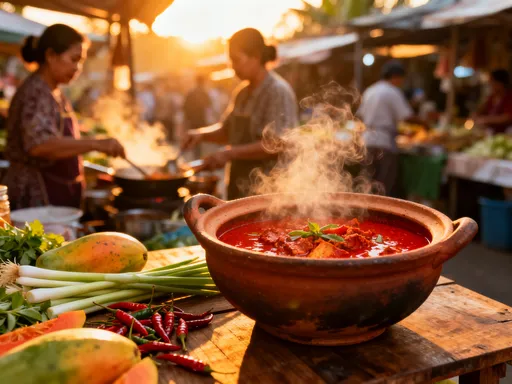
On Koh Lipe, food is more than sustenance—it is a form of cultural expression. Every meal tells a story of ancestry, environment, and seasonal rhythm. I spent an afternoon at a family-run kitchen near Sunrise Beach, where an elder named Mae Somjit cooked a yellow curry using a recipe passed down from her grandmother. The ingredients—fresh coconut milk, galangal, kaffir lime leaves, and turmeric—are all sourced locally. She grinds the paste by hand with a stone mortar, a process she says “brings out the soul of the spices.”
The meal is served on banana leaves, not plates. The rice is dyed golden with turmeric, and the curry is rich and aromatic, with chunks of local fish. Side dishes include pickled vegetables and a spicy shrimp paste dip, both made in small batches. There’s no menu—what’s served depends on what was caught or harvested that morning. This is not fusion cuisine; it’s ancestral cuisine, unchanged by trends.
What surprised me most was how these kitchens double as informal art spaces. The menu, if there is one, is painted on a wooden board with colorful chalk. Some families use handmade ceramic bowls, each one slightly different, glazed in earthy tones. One vendor even folds origami-like napkins from recycled paper, shaped like fish or boats. These small touches are not for show—they reflect a deep respect for the act of sharing food.
Even the act of eating becomes a quiet ceremony. Elders often sit together, sharing stories while eating with their hands—a traditional practice that connects them to the texture and temperature of the food. Children learn by watching, not by instruction. One afternoon, I saw a young girl carefully arranging banana leaves on a tray, mimicking her grandmother’s movements. Food, in this context, is not just nourishment. It is memory, identity, and continuity—all served without fanfare, but with deep intention.
Festivals in the Sand: Seasonal Rhythms and Community Art
While Koh Lipe does not host large-scale commercial festivals, it observes traditional celebrations with quiet dignity. During Songkran, the Thai New Year, the island transforms in subtle but meaningful ways. Instead of water fights, families gather to clean homes and temples, prepare special foods, and make offerings. Children create small floats from banana stems and flowers, which are floated on the incoming tide as symbols of letting go.
Loy Krathong, the festival of lights, takes on a unique island character. Instead of paper lanterns, locals craft krathongs from coconut shells, banana leaves, and natural materials. Candles are placed inside, along with flowers and incense. At dusk, families walk to the shore and release them into the water, creating a shimmering path of light. Some krathongs include small drawings or messages, often wishes for safe fishing seasons or healthy families. The beach becomes a gallery of floating art, temporary and beautiful.
These events are not staged for tourists. They unfold at a gentle pace, with participation from all ages. In the days leading up to the festivals, community spaces become workshops. Elders teach children how to weave, paint, and assemble offerings. Some schools display student artwork on the beach—drawings of fish, boats, and the moon—pinned to driftwood frames. There’s no competition, no prizes. The act of creation is the reward.
What makes these celebrations special is their authenticity. They are not performances, but practices. The art created during these times is ephemeral—meant to be released, not preserved. This impermanence reflects a deeper philosophy: that beauty and meaning do not require permanence. Like the tide, culture flows in cycles, returning each year with quiet familiarity.
How to Explore Koh Lipe’s Culture Respectfully and Meaningfully
To truly experience Koh Lipe’s cultural depth, travelers must shift from observation to participation. The first step is slowing down. Instead of rushing from beach to beach, take a quiet walk through the island’s back lanes. Visit early in the morning, when fishermen return with their catch and artisans begin their work. A slow pace allows space for connection—eye contact, smiles, small conversations.
Always ask before taking photographs, especially of people, spiritual sites, or private crafts. A simple gesture of respect goes a long way. Many locals appreciate genuine interest. If you see someone painting or carving, a polite question in basic Thai or Malay might lead to an invitation to watch, or even try. Some families welcome visitors to join cooking sessions or craft workshops, though these are never advertised—access comes through kindness, not brochures.
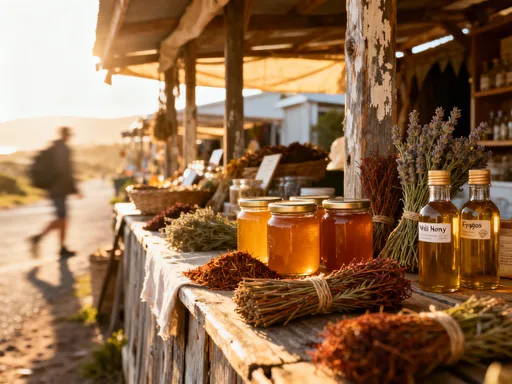
Support local vendors directly. Buy food from family kitchens, not chain restaurants. Purchase crafts from the makers themselves, not imported souvenir shops. Even small choices—like drinking from a coconut instead of a plastic bottle—align with the island’s values of sustainability and tradition.
The best time to visit for cultural immersion is during the shoulder months—May or September—when the island is less crowded. Avoid peak cruise seasons, when large groups can overwhelm the quiet rhythm of daily life. Traveling with intention, not just itinerary, allows for deeper connection. Learn a few phrases in Malay or Thai. Share a meal. Sit quietly by the shore and listen. Koh Lipe does not shout its beauty. It whispers. And in that whisper, there is a whole world of meaning.
Conclusion
Koh Lipe’s true beauty isn’t just in its shores—it’s in the quiet details shaped by generations. Exploring its art and culture isn’t about ticking boxes; it’s about connecting with a way of life that thrives gently, without fanfare. When you look closely, the island doesn’t just welcome you—it speaks. Through a hand-stamped fabric, a mural on a shutter, a candle floating on the tide, it shares stories of resilience, memory, and belonging. This is not a destination to conquer, but a culture to honor. And in honoring it, we find not just escape, but understanding. The art of Koh Lipe is not found in galleries. It is lived, breathed, and passed on—one quiet gesture at a time.