What I Found in Koh Chang’s Hidden Art Scene Will Blow Your Mind
You know that feeling when you think you’ve seen it all, and then a place like Koh Chang surprises you out of nowhere? I went for the beaches, sure, but stayed for something way deeper—the island’s quiet, thriving world of art and culture, hiding in plain sight. From hand-painted murals on sleepy village walls to local artisans shaping tradition with their hands, this isn’t just a tropical escape. It’s a living canvas. And honestly? I never saw it coming.
First Impressions: Beyond the Postcard Beaches
When most travelers picture Koh Chang, they imagine powdery white sand, turquoise waters, and the gentle sway of palm trees. And yes, the island delivers on that front—spectacularly. The coastline, especially along White Sand Beach and Lonely Beach, draws sun-seekers and snorkelers from around the world. But beyond these well-trodden shores lies a quieter, more contemplative side of the island, one that speaks not in waves but in whispers of culture, tradition, and creative expression.
My first hint that Koh Chang was more than a beach destination came early one morning in Salak Phet village. As I walked past weathered wooden homes on stilts, I noticed a small shrine adorned with hand-carved lotus motifs and vibrant floral offerings. A local woman in a cotton sarong lit incense, her movements slow and reverent. Nearby, a radio played soft Thai folk melodies—melancholic strings and gentle percussion that seemed to echo the rhythm of island life. It was an ordinary moment, yet deeply poetic. There was art here, not framed behind glass, but embedded in daily rituals, in gestures, in the way people lived.
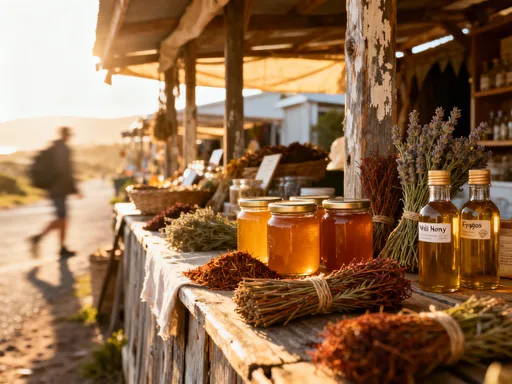
That day, I began to shift my expectations. Instead of rushing from one beach to another, I allowed myself to wander inland, where narrow roads cut through dense jungle and small farms. I passed children walking to school in bright uniforms, elders weaving baskets under shaded porches, and the occasional hand-painted sign advertising fresh coconut or local honey. Each detail felt intentional, part of a larger cultural tapestry. Koh Chang, I realized, wasn’t just a place to relax—it was a place to observe, to listen, and ultimately, to understand.
The Pulse of Local Craft: Meeting Koh Chang’s Artisans
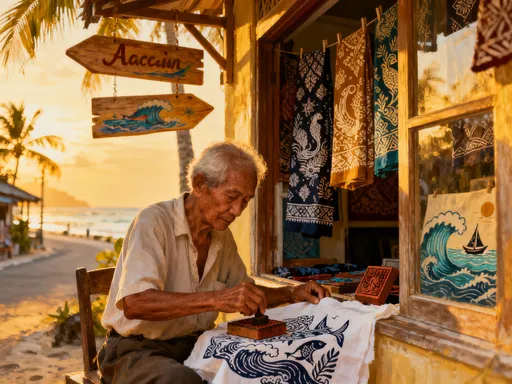
One of the most rewarding discoveries on Koh Chang was its community of artisans—men and women who keep traditional crafts alive through patience, skill, and deep respect for heritage. These are not mass-produced souvenirs churned out for tourists, but handcrafted works born from generations of knowledge. In villages like Klong Son and Bang Bao, small workshops operate quietly, often from family homes or open-air sheds shaded by banana trees.
I met Niran, a woodcarver in his late 60s, who has spent over four decades shaping teak and rosewood into intricate panels and figurines. His hands, rough and marked by years of chiseling, moved with surprising delicacy as he demonstrated how to carve a traditional Garuda—a mythical creature from Thai and Buddhist lore. “Each line has meaning,” he explained through a translator. “This curve is the wind beneath its wings. This pattern represents protection.” His workshop, filled with sawdust and the scent of aged wood, was a sanctuary of focus and devotion.
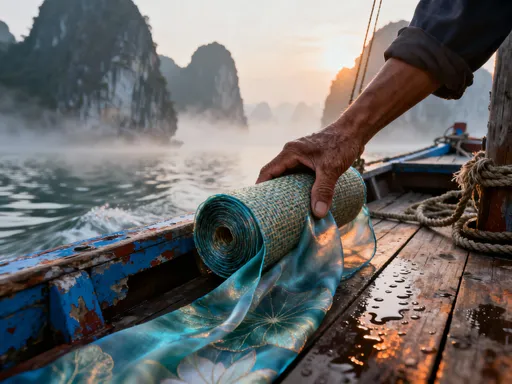
Not far away, in a quiet compound behind a rice paddy, I visited a collective of women who practice traditional mulberry paper making. Using bark from the saa tree, they soak, boil, and beat the fibers into pulp, then hand-form each sheet on bamboo screens. The result is a textured, earth-toned paper used for lamps, notebooks, and ceremonial decorations. One of the artisans, Dao, told me that the craft was passed down from her grandmother. “It’s slow work,” she said with a smile, “but it connects us to the land and to our ancestors.”
What struck me most was the humility of these creators. They didn’t see themselves as artists in the Western sense—no galleries, no exhibitions, no self-promotion. Their work was simply part of life, a way of preserving identity in a world that often overlooks rural traditions. Yet, their craftsmanship is extraordinary, a testament to the quiet dignity of handmade culture. And while younger generations are increasingly drawn to city life and modern careers, there are signs of revival—local schools now offer craft workshops, and some young people are returning to learn the skills of their elders.
Street Art with a Soul: Murals That Tell Stories
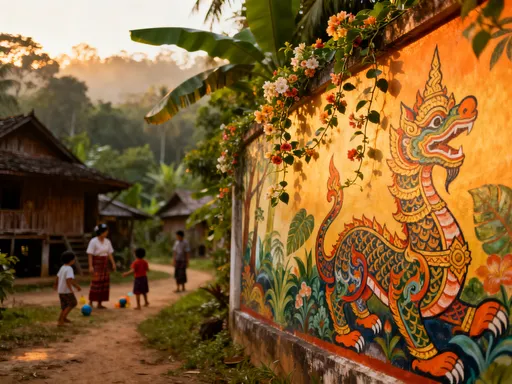
While many islands use street art as a tool for tourism marketing, Koh Chang’s murals feel different—they are not decorations, but narratives. Scattered across villages like Salak Phet, Klong Son, and Kai Bae, these large-scale paintings transform plain concrete walls into vibrant storytellers. They depict scenes from Thai folklore, island ecology, and the everyday lives of local people—fishermen hauling nets, children playing under banyan trees, elephants walking through misty forests.
One particularly moving mural in Salak Phet shows a grandmother teaching her granddaughter how to weave a traditional pattern. The colors are earthy—ochre, moss green, and deep indigo—and the expressions are tender. A nearby plaque, written in Thai and English, explains that the piece was created by a local artist as part of a community project funded by a regional cultural NGO. The theme? Intergenerational knowledge. It’s not just a painting; it’s a statement about what the community values.
Another mural in Klong Son portrays the island’s rich biodiversity: a hornbill in flight, a monitor lizard basking on a rock, and a school of silver fish darting through coral. The artist, a young woman named Pim, told me she grew up on the island and wanted to remind both locals and visitors of what’s at stake. “We see less wildlife every year,” she said. “This is my way of honoring what remains.” Her work is part of a growing movement to use public art as a form of cultural and environmental preservation.
What makes these murals so powerful is their authenticity. They are not commissioned by hotels or tourist boards, but often initiated by villagers themselves, with support from local organizations. The artists are frequently residents or former islanders who return to contribute. There’s no commercial agenda—just a desire to tell stories that matter. Walking through these villages, I felt like I was reading an open-air book, each mural a chapter in Koh Chang’s living history.
Temples as Living Art Galleries
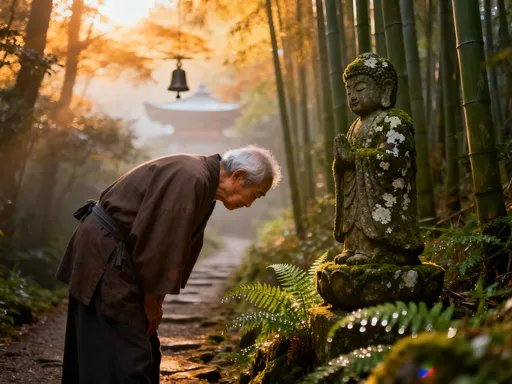
In Thailand, temples are more than places of worship—they are masterpieces of art and architecture, where spirituality and aesthetics merge into a single expression. On Koh Chang, this is especially true at Wat Salak Phet and Wat Khlong Son, two active monasteries that serve as both religious centers and cultural repositories. Unlike museum exhibits, these spaces are alive with activity—monks chanting at dawn, families making offerings, children lighting candles—yet every surface tells a story.
At Wat Salak Phet, I was struck by the ornate wooden doors of the main ordination hall, carved with swirling floral patterns and mythical creatures. Inside, the walls were covered in faded but still vivid murals depicting scenes from the Jataka tales—the past lives of the Buddha. One panel showed a deer offering itself to a starving traveler, a story about compassion and sacrifice. The colors, though softened by time, retained their emotional depth: deep reds for passion, gold for enlightenment, and cool blues for serenity.
The temple’s centerpiece, a seated Buddha image, was cast in bronze and gilded with gold leaf applied by devotees over decades. Each small patch represented a prayer, a wish, a moment of gratitude. I watched as an elderly woman carefully pressed a square of gold onto the statue’s robe, her eyes closed in quiet concentration. It was a ritual of devotion, but also an act of artistic participation—every visitor contributes to the ongoing creation of sacred beauty.
Wat Khlong Son, nestled near a freshwater stream, offers a more rustic but equally profound experience. Its murals, painted directly onto stucco walls, depict local landscapes—rice fields, fishing boats, and the island’s mountainous interior. Here, the divine is not separated from the earthly; instead, spiritual teachings are illustrated through familiar scenes. A monk explained that the murals are meant to help villagers understand Buddhist principles through what they know. “If you see the Buddha walking through a paddy field,” he said, “you understand that enlightenment is possible anywhere.”
For visitors, these temples offer a rare opportunity to witness art that is not only preserved but actively used and revered. Photography is allowed, but with respect—no flash, no loud voices, and proper dress required. Removing shoes before entering, covering shoulders and knees, and moving quietly are not just rules, but gestures of humility. In these spaces, art is not observed from a distance; it is lived.
Cultural Rhythms: Music, Dance, and Community Life
Culture on Koh Chang is not confined to static objects—it moves, it breathes, it resonates in sound and motion. One evening, as I wandered through Bang Bao village, I heard the rhythmic beat of drums echoing from a community hall. Curious, I approached and found a circle of men and women playing traditional instruments—ranaat (a wooden xylophone), klong khaek (barrel drums), and a pi (a reed flute). They were rehearsing for the upcoming Vegetarian Festival, a regional celebration that honors local deities and ancestral spirits.
The music was hypnotic—layered rhythms that built in intensity, punctuated by sudden pauses and bursts of sound. A few children danced at the edge of the circle, mimicking the movements of elders. No one seemed to mind my presence; in fact, one of the drummers gestured for me to sit on a nearby bench. “You’re welcome to listen,” he said in broken English. “This is our way of remembering who we are.”
Later in the week, I attended a folk dance performance during a temple fair at Wat Salak Phet. Dancers in colorful costumes performed the Fon Leb, a traditional northeastern Thai dance characterized by graceful hand movements and slow, deliberate steps. The choreography told a story of harvest and gratitude, with gestures mimicking sowing seeds, gathering rice, and offering food to the monks. The audience, mostly locals, clapped in rhythm, their faces lit with pride.
These moments of cultural expression are not staged for tourists. They are part of the island’s social fabric, moments of joy, remembrance, and continuity. While some resorts offer “cultural shows,” the authentic experiences happen in villages, during festivals, or in spontaneous gatherings. Travelers who seek them out are not spectators, but witnesses—and sometimes, if invited, even participants. The key is respect: to arrive quietly, to listen more than speak, and to accept that one may not understand everything, and that’s okay.
How to Experience It Right: A Traveler’s Guide
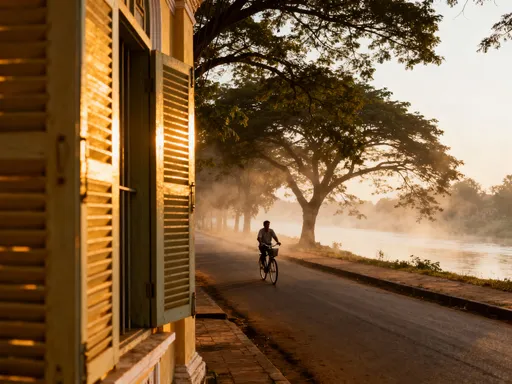
Discovering Koh Chang’s hidden art scene requires a shift in travel mindset—from fast-paced sightseeing to slow, intentional exploration. The island’s cultural heart lies inland, away from the main tourist strips, so renting a bicycle or hiring a local guide is the best way to access these spaces. Motorbikes are common, but a slower pace allows for deeper observation—notice the patterns on a woven mat, the lyrics of a passing song, the way light falls on a mural at sunset.
Start in Salak Phet or Klong Son, where community-led initiatives have made cultural tourism more accessible. Many artisans welcome visitors by appointment or during open-house days. When engaging with creators, ask thoughtful questions—about their process, their inspiration, their hopes for the future. Avoid treating their work as mere souvenirs; instead, acknowledge the time and meaning behind each piece. If you choose to purchase something, do so directly from the maker or a fair-trade cooperative.
Time your visit around local events. The Vegetarian Festival in October, Loy Krathong in November, and Songkran in April all offer rich cultural experiences, from ritual processions to communal meals. Even smaller gatherings, like temple fairs or school performances, provide insight into daily life. Check with local guesthouses or community centers for schedules—many events are not widely advertised but are open to respectful guests.
Choose accommodations that support the local economy. Eco-friendly bungalows, family-run guesthouses, and homestays not only offer authentic hospitality but often partner with artisans and farmers. Eat at local restaurants that source ingredients from island producers—try dishes like gaeng som (spicy sour curry) or fresh grilled fish with mango salad. Every choice you make can contribute to the sustainability of the culture you’re there to experience.
Most importantly, travel with humility. This is not a performance for outsiders; it is a living tradition. Put your phone away, speak softly, and be present. The art of Koh Chang is not something you consume—it’s something you absorb.
Why This Matters: Preserving Culture in a Tourist World
As tourism continues to grow across Southeast Asia, places like Koh Chang face a delicate balancing act. On one hand, visitors bring economic opportunity and global awareness. On the other, the pressure to cater to mass tourism can erode local traditions, turning culture into a commodity. The island’s hidden art scene—its murals, crafts, music, and temples—is not just beautiful; it is a vital part of its identity, a thread connecting past to present.
What I witnessed during my stay gave me hope. Local initiatives, supported by NGOs and conscious travelers, are helping to preserve these traditions in meaningful ways. Artisans are gaining recognition. Murals are being restored. Young people are learning folk songs and dances. But this progress depends on continued awareness and responsible engagement. When travelers choose to go beyond the beach, to seek out the stories behind the scenery, they become allies in cultural preservation.
Traveling deeply—slowing down, listening, respecting—doesn’t just enrich the visitor. It strengthens the community. It says: I see you. I value what you do. I want to help protect it. In a world where so much feels disposable, Koh Chang reminds us that some things are worth preserving—the quiet craft of a woodcarver, the song of a village drum circle, the prayer painted on a temple wall.
So the next time you plan a tropical getaway, consider this: the most beautiful destination might not be the one with the clearest water, but the one with the deepest soul. Koh Chang’s art scene isn’t hidden because it wants to stay secret—it’s waiting to be discovered by those who are ready to look beyond the surface. And when you do, you won’t just see a different side of the island. You’ll see a different way of traveling—one that leaves not just footprints, but understanding.