Secret Wilds of Colón: Why Panama’s Protected Areas Are a Must-See Escape
Nestled along Panama’s Caribbean coast, Colón is more than just a transit point—it’s a gateway to breathtaking protected natural areas few travelers truly explore. I was surprised by the lush rainforests, vibrant wildlife, and crystal-clear rivers hidden just beyond the well-trodden path. This is real, raw nature, preserved and powerful. If you're craving an authentic jungle adventure with practical access and unforgettable moments, Colón’s conservation zones deliver in ways you never expected. Far from the bustling ports and commercial corridors, these quiet sanctuaries offer a rare chance to reconnect with the earth, breathe deeply under a canopy of ancient trees, and witness life thriving in its most untamed form. For the thoughtful traveler, this region represents not just escape, but purpose.
Introduction to Colón, Panama – Beyond the Cruise Ships
Colón, often reduced to a footnote in Panama travel itineraries, is typically associated with the Colón Free Trade Zone or as a brief stop for cruise passengers en route to the Panama Canal. Yet beneath this utilitarian image lies a quietly extraordinary truth: Colón is one of the country’s most ecologically significant provinces. Located on the northern Caribbean side of the isthmus, it borders the Atlantic and stretches into dense tropical forests, river systems, and protected wetlands. While many tourists pass through without pausing, those who do venture beyond the city limits discover a landscape rich in biodiversity and natural serenity.
The perception of Colón as merely a logistical hub overlooks its deeper value as a conservation frontier. In recent years, sustainable tourism has begun to take root, driven by local awareness and international interest in eco-travel. The province hosts several officially designated protected areas, some of which are internationally recognized for their ecological importance. These are not remote, inaccessible reserves known only to scientists—they are within reach of day-trippers and weekend explorers, offering immersive experiences without requiring weeks of jungle preparation.
What makes Colón especially compelling is its accessibility. From Panama City, it’s less than two hours by car to reach the edges of protected forest. Unlike more remote regions of Darién or eastern Panama, Colón offers a rare balance: wild nature within practical reach. This proximity makes it ideal for families, casual hikers, and nature enthusiasts who want authenticity without extreme isolation. As global travelers increasingly seek meaningful, low-impact experiences, Colón emerges as a quiet leader in accessible conservation tourism—one that invites visitors not just to see nature, but to support its preservation.
Understanding Panama’s Protected Areas: What They Are and Why They Matter
Panama’s commitment to environmental protection is enshrined in its National System of Protected Areas, known locally as SINAP (Sistema Nacional de Áreas Protegidas). Managed historically by the National Environmental Authority (ANAM), now part of the Ministry of Environment (MiAmbiente), this network covers over 30% of the country’s land and marine territory. These areas range from national parks and wildlife refuges to forest reserves and indigenous comarcas with conservation mandates. Each is designated to safeguard critical ecosystems, protect endangered species, and maintain ecological balance across a narrow but biologically rich country.
The significance of protected areas extends far beyond scenic beauty. They serve as vital watersheds, ensuring clean water for communities and agriculture. They act as carbon sinks, helping mitigate climate change by storing vast amounts of atmospheric carbon in their dense vegetation. They also preserve genetic diversity—Panama, despite its small size, hosts more than 10,000 plant species, over 970 bird species, and hundreds of mammals, reptiles, and amphibians. Many of these species are found nowhere else on Earth, making conservation not just a national priority but a global responsibility.
In Colón province, protected areas contribute to regional stability by preventing soil erosion, regulating local climates, and supporting pollination for nearby farms. They also provide a buffer against extreme weather, a growing concern in the face of intensifying Caribbean storms. Scientific studies have shown that intact forests reduce flood risks and stabilize river flows during both dry and rainy seasons. These ecological services, though often invisible, are essential to human well-being. By preserving these lands, Panama protects not only wildlife but also the livelihoods and safety of its people.
For travelers, understanding the role of protected areas transforms a simple visit into a conscious act. Every footstep on a marked trail, every guided tour booked with a local operator, and every photograph taken in these zones can become part of a larger story of stewardship. Tourism, when done responsibly, generates funding and public support for conservation. In this way, visiting a protected area is not passive observation—it’s participation in a living effort to sustain the planet’s biodiversity.
Key Protected Zones Near Colón: Real and Accessible Natural Treasures
Among the most notable conservation sites in Colón is the San San-Pond Sak wetland, a Ramsar-designated site recognized for its international ecological importance. Located near the border with Costa Rica, this expansive area consists of mangrove forests, freshwater lagoons, and coastal swamps that serve as critical habitat for migratory birds, fish nurseries, and amphibians. The wetland supports species such as the West Indian manatee, green turtles, and the yellow-bellied elaenia, a small songbird that travels thousands of miles each year. Its intricate waterways are best explored by kayak or guided boat tour, offering a peaceful, reflective journey through a world of tangled roots and quiet ripples.
Beyond San San-Pond Sak, Colón province contains several protected forest reserves managed under national conservation policy. These include the upper watersheds of the Indio and Juan Díaz rivers, which feed into larger hydrological systems supplying water to nearby towns and agricultural zones. While not developed as formal parks with visitor centers, these areas are accessible through community-led ecotourism initiatives. Local guides from nearby villages often lead small groups along established trails, sharing knowledge of medicinal plants, animal tracks, and seasonal changes in the forest.
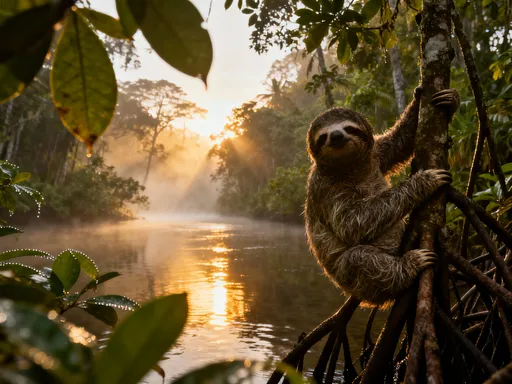
The ecosystems found here are classic examples of Caribbean lowland rainforest—towering hardwoods draped in vines, epiphytic orchids clinging to branches, and a constant hum of insect life. The air is thick with moisture, and the scent of damp earth and blooming heliconias lingers after rain. Wildlife is abundant, though often elusive. Visitors may catch a glimpse of a three-toed sloth moving slowly through the canopy, hear the deep howl of a troop of monkeys at dawn, or spot the flash of a blue morpho butterfly between sunlit gaps.
One of the most rewarding aspects of visiting these areas is the lack of commercialization. There are no souvenir shops, no loudspeaker announcements, no crowded overlooks. Instead, the experience is intimate and quiet, shaped by the rhythms of nature. Access is typically arranged through local cooperatives or environmental NGOs that work with MiAmbiente to ensure compliance with conservation rules. These partnerships help ensure that tourism benefits both the environment and the people who live closest to it.
Planning Your Visit: Practical Tips for Responsible Exploration
For those considering a visit to Colón’s protected areas, planning ahead ensures both safety and sustainability. The best time to travel is during the dry season, which generally runs from mid-December to April. During these months, trails are more passable, insects are less prevalent, and river levels are lower, making crossings safer. While the wet season brings lush greenery and active wildlife, heavy rains can make roads impassable and increase the risk of slips or flooding in low-lying areas.
Getting to the protected zones typically begins in Colón city or, more conveniently, from Panama City. From the capital, a rental car or private shuttle can take you north along the Transístmica Highway, turning east toward communities like Chagres or Santa Isabel. Public transportation exists but is limited and may not reach trailheads directly. For this reason, many visitors choose to book guided tours through eco-conscious operators who provide transportation, meals, and expert interpretation. These tours are often led by licensed naturalists or community members trained in environmental education.
Entry to protected areas may require permits or small fees, which are used to support park maintenance and ranger patrols. It is essential to verify current access rules through official channels or local guides, as regulations can change based on conservation needs or seasonal restrictions. Visitors should carry identification, a copy of their booking confirmation, and emergency contact information. While cell service can be spotty, many guides carry satellite communication devices for safety.
Packing wisely enhances comfort and minimizes environmental impact. Recommended gear includes lightweight, quick-drying clothing; closed-toe hiking shoes with good grip; a wide-brimmed hat; insect repellent; sunscreen; and a reusable water bottle. A small backpack with a rain cover is useful for protecting electronics and snacks. Binoculars and a field guide to birds or plants can deepen the experience, especially for those interested in wildlife observation. Most importantly, all trash must be carried out—there are no disposal facilities in these remote areas.
Responsible behavior is non-negotiable. Staying on marked trails prevents soil compaction and protects delicate plant life. Feeding or approaching wildlife is strictly prohibited, as it disrupts natural behaviors and can endanger both animals and people. Visitors should avoid loud noises, respect sacred or culturally significant sites, and follow all instructions from guides. By traveling with care, each person contributes to the long-term health of these irreplaceable ecosystems.
Experiencing the Jungle: A Day in the Life of a Nature Visitor
Imagine waking before sunrise, the air already warm and fragrant with the scent of wet leaves and blooming ginger. You arrive at the edge of a protected forest with a local guide, your boots laced tight and your water bottle full. As the first light filters through the canopy, the forest stirs—not with sudden noise, but with a gradual awakening. A howler monkey’s deep call echoes in the distance, followed by the staccato chirp of a trogon and the flutter of wings as toucans take flight. This is the beginning of a day immersed in one of Panama’s most vital, yet overlooked, natural sanctuaries.
Walking along a narrow trail, you cross wooden footbridges over clear, shallow streams. The sound of rushing water blends with the hum of cicadas and the occasional rustle of a lizard darting through fallen leaves. Your guide pauses to point out a sloth curled in the fork of a tree, nearly invisible against the bark. With binoculars, you see its slow, deliberate movements—a reminder that time moves differently here. Every step reveals something new: a cluster of bright red heliconias, a spiderweb glistening with dew, the tracks of an agouti pressed into the mud.
By mid-morning, the heat intensifies, but the forest remains cool beneath the thick canopy. Your guide stops beside a large ceiba tree, its massive buttress roots spreading like stone fingers. He explains how indigenous communities once considered this tree sacred, a bridge between the earth and the sky. He crushes a leaf from a nearby plant and lets you smell it—sharp and minty. It’s “ají dulce,” used traditionally to relieve headaches and fevers. These moments of learning transform the hike from a physical journey into a cultural and educational one.
Lunch is a simple meal of plantains, rice, and grilled fish, eaten under a thatched shelter beside a river. Children from a nearby village might join later in the day, leading a short walk to a waterfall where you can wade in cool, clear pools. There are no lifeguards, no railings—just nature in its purest form. As the sun begins to dip, casting golden light through the trees, the forest quiets again. You return along the same path, now seeing it with fresh eyes—more attuned to the whispers of the wind, the patterns of light, the quiet miracles unfolding all around.
This kind of experience does more than entertain—it restores. It reminds visitors of their place within the natural world, not above it. For mothers, caregivers, and women managing busy households, such a day offers rare mental clarity and emotional renewal. There is no rush, no multitasking, no digital distractions—only presence. And in that presence, a deep sense of peace takes root.
Challenges and Conservation Efforts in Colón’s Natural Areas
Despite their ecological value, the protected areas of Colón face ongoing threats. Deforestation, driven by agricultural expansion and illegal logging, continues to fragment forest cover. In some regions, land is cleared for subsistence farming or cattle grazing, often without proper authorization. These activities not only destroy habitat but also increase erosion, pollute waterways, and reduce the land’s ability to absorb carbon. Without consistent monitoring and enforcement, even designated protected zones can become vulnerable.
Funding for park management remains limited. Rangers and conservation staff often work with minimal resources, relying on outdated equipment and irregular patrols. This makes it difficult to prevent illegal activities or conduct scientific research. Additionally, climate change brings new pressures—rising temperatures, shifting rainfall patterns, and more frequent storms—all of which stress already fragile ecosystems.
Yet, hope persists through local action. Community-based conservation initiatives have emerged in several villages near protected forests. These groups train residents as eco-guides, manage reforestation projects, and run environmental education programs in schools. Some have partnered with national NGOs and international organizations to secure grants and technical support. One such project in the upper Chagres region has planted over 50,000 native trees in degraded areas, restoring connectivity between forest fragments and creating corridors for wildlife.
Women are playing a vital role in these efforts. In several communities, women’s cooperatives have taken the lead in sustainable agriculture, crafting, and eco-tourism services. They grow organic produce, weave baskets from natural fibers, and prepare traditional meals for visiting groups—activities that generate income while promoting environmental values. Their leadership demonstrates that conservation is not just about protecting trees and animals, but about building resilient, self-sufficient communities.
Visitors can support these efforts simply by choosing responsible tour operators, respecting local customs, and spreading awareness. Every dollar spent with a community guide stays in the region. Every photograph shared on social media can inspire others to care. And every conversation about the importance of these forests helps build a culture of stewardship that transcends borders.
Why This Journey Matters: Connecting with Nature and Supporting Sustainability
Traveling to Colón’s protected areas is more than a vacation—it’s a reconnection. In a world dominated by screens, schedules, and constant demands, stepping into a rainforest offers a rare return to simplicity. The sound of birds replaces notifications. The rhythm of walking replaces the rush of traffic. The sight of a butterfly landing on a leaf becomes a moment of wonder. For women who often carry the emotional and logistical weight of family life, this kind of experience is not a luxury—it’s a necessity for well-being.
These journeys also foster environmental awareness. Seeing a mangrove root system up close makes the concept of carbon sequestration real. Watching a sloth move through the canopy deepens understanding of habitat loss. Tasting food grown without chemicals reinforces the value of sustainable practices. Knowledge gained in nature stays with people long after they return home, influencing choices about consumption, waste, and advocacy.
Most importantly, visiting Colón’s wild spaces supports sustainability in action. Tourism revenue funds conservation work, empowers local families, and proves that protecting nature can be economically viable. When communities see the value of standing forests, they become stronger defenders of them. This creates a positive cycle: preservation leads to opportunity, which leads to greater investment in protection.
Colón deserves to be seen not as a stopover, but as a destination of meaning. Its forests, rivers, and wetlands are part of Panama’s living heritage—places where nature thrives because people have chosen to defend it. For the traveler seeking authenticity, beauty, and purpose, this region offers all three. So consider your next escape not just in terms of comfort or convenience, but in terms of contribution. Step off the beaten path. Walk softly. Listen deeply. And let the secret wilds of Colón remind you of what truly matters.