Taste the Island: How Koh Samui’s Local Flavors Stole My Heart
From the first bite of spicy-sour som tum to the sweet scent of coconut in freshly grilled bai bua loi, Koh Samui isn’t just a feast for the eyes—it’s a flavor explosion. I came for the beaches, but stayed for the food. Every market stall, seaside shack, and family-run restaurant told a story of tradition, passion, and island pride. This is real Thai cuisine, unfiltered and unforgettable. The aroma of lemongrass and chili carried on the ocean breeze, the rhythmic pounding of mortar and pestle in open-air kitchens, the warm smiles of vendors offering samples—these moments transformed my trip from a simple island escape into a deep, sensory journey. In Koh Samui, every meal feels like an invitation to belong.
First Impressions: When Food Becomes the Destination
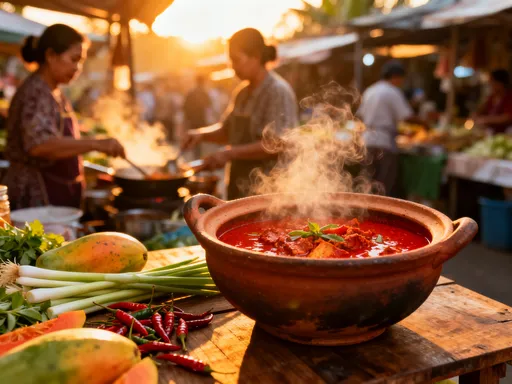
Upon arriving in Koh Samui, the tropical heat wrapped around me like a damp towel, but it wasn’t the turquoise water or the palm-lined shores that first captured my attention—it was the scent. A rich, smoky perfume of grilled meat, tangy lime, and toasted coconut drifted from a roadside market just beyond the airport road. Drawn by curiosity and hunger, I followed the trail of aroma to a cluster of open-air stalls beneath a faded blue tarp. Here, life unfolded in vivid motion: a woman in a floral apron stirred a giant pot of yellow curry, steam curling into the late afternoon light; children balanced bowls of noodles on plastic trays; and motorbikes paused briefly as drivers grabbed quick meals before continuing their routes.
This wasn’t a curated food court or a resort menu designed for foreign palates. This was the real heartbeat of the island—raw, energetic, and deeply rooted in daily life. I ordered a plate of som tam, the iconic green papaya salad, and watched as the vendor pounded shredded papaya, chilies, garlic, and lime juice in a wooden mortar with practiced strength. The first bite was a revelation: fiery, sour, salty, and sweet all at once, an explosion of flavors that danced across the tongue. In that moment, I realized that my journey would not be defined by sunbathing or snorkeling, but by taste.
Over the next few days, I found myself skipping famous viewpoints to linger at morning markets, trading scenic overlooks for the chance to try fresh kanom jeen—thin rice noodles topped with fragrant fish curry—and steamed banana cakes wrapped in banana leaves. While many tourists flock to Chaweng Beach or the Big Buddha, I discovered that the island’s soul wasn’t in its postcard vistas, but in its food culture. Each dish carried generations of tradition, a reflection of the land, sea, and people who shaped it. By prioritizing authentic meals over photo opportunities, I began to experience Koh Samui not as a visitor, but as a guest welcomed into the rhythm of local life.
The Street Food Scene: Where Every Bite Tells a Story
Koh Samui’s street food is more than convenience—it’s a living archive of Thai culinary heritage. Found at every corner, from bustling intersections to quiet village lanes, these open-air kitchens serve dishes that have been perfected over decades, if not centuries. One of the most memorable experiences was discovering gaeng som, a vibrant orange curry known for its bold, sour-spicy kick. Unlike the creamy curries often served in Westernized Thai restaurants, gaeng som is thin, fiery, and packed with chunks of fish, bamboo shoots, and red chilies. I first tasted it at a small stall near Nathon Market, where the vendor, an elderly woman with weathered hands and a gentle smile, ladled the steaming broth over a bowl of jasmine rice. The heat built slowly, warming my chest, while the tang of tamarind balanced the spice with surprising elegance.
Another staple of the island’s street fare is moo ping, grilled pork skewers marinated in a blend of garlic, coriander root, and light soy sauce. Served with sticky rice wrapped in banana leaf, these skewers are a common breakfast or late-night snack. I often found myself at a quiet roadside cart just before dawn, where the scent of charcoal and caramelized pork filled the air. The meat was tender, slightly charred at the edges, and paired perfectly with a small dish of spicy-sweet dipping sauce. What struck me most was the consistency—every vendor had their own subtle twist, yet all maintained a standard of freshness and care that rivaled any fine dining establishment.
And then there was mango sticky rice, a dessert so beloved it transcends age and region. In Koh Samui, it’s made with locally grown mangoes—plump, golden, and fragrant—served over warm sticky rice bathed in creamy coconut milk. I watched as one vendor cracked open fresh coconuts to extract the milk, ensuring every batch was rich and natural. The dish, simple in appearance, carried a depth of flavor that spoke of careful craftsmanship. More than just sustenance, these street foods represent a culture of generosity and pride. Each vendor takes personal ownership of their craft, ensuring that every plate reflects the island’s spirit.
Hidden Gems: Off-the-Beaten-Path Eateries That Shine
While the night markets of Lamai and Fisherman’s Village attract crowds, some of the most memorable meals I had were in places without signs, menus, or even names. These hidden gems—often just a few plastic tables under a thatched roof—are where locals eat, and where authenticity thrives. One such spot, tucked behind a quiet stretch of Lamai Beach, became my favorite discovery. Reached only by a narrow dirt path between coconut trees, it was run by a grandmother and her daughter, who cooked everything from memory and served it with quiet dignity.
There, I had the best som tam of my life. Not because it was the spiciest or the most complex, but because it was made with intention. The grandmother pounded the ingredients in a stone mortar, adjusting the seasoning with a practiced eye. She offered me a taste midway through, asking in broken English if I preferred more lime or less sugar. When served, the salad was accompanied by grilled salted crab, bitter eggplant, and a small jar of homemade chili jam so potent it made my eyes water—but in the best possible way. The meal was paired with cold coconut water straight from the shell, sipped as the sunset painted the sky in hues of coral and gold.
Another unmarked eatery near Bophut Village specialized in southern Thai curries, known for their intensity and use of fermented ingredients. I was led there by a local taxi driver who, upon learning of my interest in food, insisted I try their massaman curry with roti. The dish was unlike any I’d had before—rich, nutty, and deeply spiced, with tender chunks of beef that fell apart at the touch of a fork. The roti, hand-stretched and pan-fried to golden perfection, was flaky on the outside and soft within, ideal for soaking up the thick sauce. What made the experience special wasn’t just the food, but the sense of being let in on a secret. These places don’t advertise. They rely on word of mouth, loyalty, and the quiet assurance that if you’ve found them, you’re ready to eat like a local.
Cooking Like a Local: My Hands-On Thai Kitchen Experience
To truly understand Koh Samui’s cuisine, I knew I had to step into the kitchen. I signed up for a half-day Thai cooking class hosted by a local family in a quiet rural area near Maenam. The experience began at dawn with a visit to a morning market, where our instructor, a soft-spoken woman named Khun Ying, taught us how to select the freshest ingredients. She showed us how to sniff kaffir lime leaves for potency, press on eggplants to test firmness, and choose galangal with smooth, unblemished skin. Everything we picked—chilies, lemongrass, holy basil, young coconut—would be used in the dishes we prepared.
Back at the open-air kitchen, surrounded by banana trees and the distant sound of roosters, we learned the art of balancing the five fundamental Thai flavors: sweet, sour, salty, bitter, and spicy. Khun Ying demonstrated how to make green curry paste from scratch, grinding fresh green chilies, shrimp paste, lemongrass, and kaffir lime zest in a granite mortar. The process was labor-intensive but meditative, each ingredient releasing its essence under the steady rhythm of the pestle. I tried my hand at it and quickly learned that achieving the right texture and harmony required both strength and intuition.
We prepared four dishes: green curry with chicken, pad thai, som tam, and mango sticky rice. For the pad thai, Khun Ying emphasized the importance of timing—cooking the noodles just until they absorbed the tamarind sauce, adding the egg at the right moment, and garnishing with crushed peanuts and fresh lime. As we sat down to eat our creations, she reminded us that Thai cooking is not about precision, but about feeling. “You cook with your heart,” she said, “and adjust with your taste.” That lesson stayed with me. The food we made wasn’t perfect, but it was honest, vibrant, and deeply satisfying. More than a class, it was a cultural exchange—a way to honor the traditions that shape every meal on the island.
From Farm to Table: The Roots of Samui’s Flavors
The bold, aromatic flavors of Koh Samui’s cuisine don’t appear by accident—they are rooted in the island’s fertile soil and tropical climate. To trace the origins of these tastes, I visited a small organic farm near the hills of Na Muang. Spread across a few acres, the farm grows coconuts, pineapples, papayas, bananas, and a wide variety of herbs and vegetables used in Thai cooking. The owner, a former chef who returned to his family’s land, explained how commercial farming had once threatened local biodiversity, but a growing movement toward sustainable agriculture is restoring balance.
As we walked through the rows of lemongrass and turmeric, he pulled up a fresh rhizome and showed me how to scrape off the skin. “This is what gives our curries their warmth,” he said, handing me a piece to smell. The earthy, slightly peppery aroma was intense and grounding. Nearby, kaffir lime trees bore fruit with deeply textured skins, essential for adding citrusy depth to soups and curries. The farm also raises free-range chickens and maintains a small pond for freshwater fish, ensuring that proteins are as fresh and natural as the produce.
What impressed me most was the farm’s role in the local food chain. It supplies several family-run restaurants and cooking schools, bypassing large distributors and ensuring that chefs receive ingredients at their peak. This direct connection between farm and table preserves flavor and supports the community. I later tasted dishes made with produce from the farm at a nearby eatery and noticed a difference—the herbs were more vibrant, the coconut milk richer, the overall taste more alive. It was a reminder that great food begins long before it reaches the plate, nurtured by sun, rain, and careful stewardship.
Balancing Tradition and Tourism: How Food Culture Is Evolving
As tourism continues to grow on Koh Samui, the island’s food culture faces both opportunities and challenges. On one hand, increased demand has led to more restaurants, cooking classes, and food tours, creating jobs and promoting Thai cuisine globally. On the other, some establishments have altered their recipes to suit foreign palates—toning down spice, substituting ingredients, or presenting dishes in overly stylized ways that sacrifice authenticity. While these adaptations make Thai food more accessible, they risk diluting its essence.
Yet, there is a strong counter-movement. Many local chefs and families are doubling down on tradition, refusing to compromise on flavor or technique. Some restaurants now label their dishes as “Thai-style” versus “for foreigners,” allowing customers to choose the level of authenticity they desire. Others have begun hosting “heritage dinners” featuring regional specialties rarely seen outside their provinces. These efforts are supported by grassroots organizations that promote sustainable tourism and cultural preservation, encouraging visitors to seek out genuine experiences rather than commercialized versions.
Travelers can play a role in protecting this culinary heritage. Choosing family-run eateries over international chains, asking for dishes “as the locals eat them,” and showing respect for food customs all contribute to a more sustainable food ecosystem. Even simple actions—like finishing your plate, complimenting the cook, or returning to the same stall—send a message that authenticity is valued. When tourists embrace real Thai food, they help ensure that future generations can taste the island as it was meant to be experienced.
Why Food Is the True Souvenir of Koh Samui
When I look back on my time in Koh Samui, the images that linger aren’t the sunsets or the sandy shores—they are the moments around food. The laughter shared over a communal plate of grilled seafood. The quiet morning at a roadside stall, sipping jasmine tea while watching the world wake up. The warmth of a grandmother placing an extra spoonful of curry on my plate “for strength.” These experiences, woven together by taste and connection, formed the heart of my journey.
In a world where souvenirs are often forgotten and photos fade, food remains a lasting memory. It engages all the senses, ties us to place and people, and carries emotional weight. To taste Koh Samui is to understand its generosity, its resilience, and its deep respect for nature and tradition. It’s a cuisine born from the sea and soil, shaped by generations of hands that know how to coax flavor from the simplest ingredients.
For travelers seeking more than surface-level tourism, I offer this advice: slow down, sit down, and eat like a local. Skip the imported wine and try the fresh coconut. Order the dish you can’t pronounce. Smile, point, and trust the vendor’s recommendation. Let your palate lead you to hidden corners of the island where culture is alive and unchanged. Because the real magic of Koh Samui isn’t just in its beauty—it’s in the way a single bite can make you feel at home, thousands of miles from where you began. The island’s greatest gift isn’t something you can pack in a suitcase. It’s something you carry in your memory, one unforgettable meal at a time.