Hidden Frames: Where Battambang’s Quiet Corners Come Alive Through the Lens
You know that feeling when a place just clicks through your camera? Battambang isn’t about crowds or flashy landmarks—it’s quiet magic. I wandered its lanes with my lens, chasing golden light and unposed moments. From riverside cafés to tucked-away temples, every shot felt honest. This isn’t just travel photography; it’s about slowing down and seeing soul. If you’re after real moments, not filters, let me show you where Battambang truly breathes.
The Rhythm of a Different Cambodia
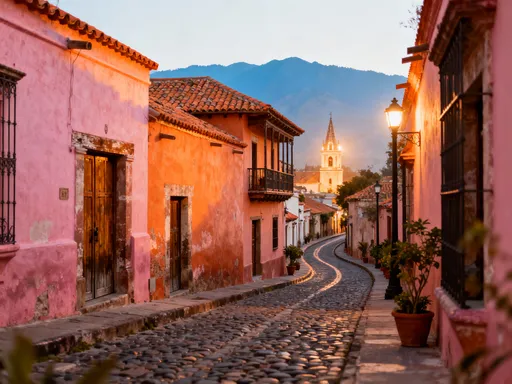
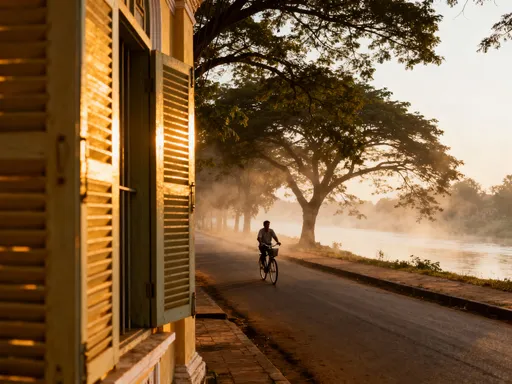
Battambang offers a refreshing contrast to the more visited corners of Cambodia. While Phnom Penh pulses with urban energy and Siem Reap thrives on temple tourism, Battambang unfolds at a gentler pace. Here, life flows like the Sangker River—steady, reflective, and unbothered by the rush of modern travel. Tree-lined boulevards stretch beneath wide skies, shaded by frangipani and banyan trees that have stood for generations. French colonial buildings with peeling pastel facades line the streets, their shuttered windows and wrought-iron railings whispering stories of a quieter time. This is not a city built for spectacle, but one shaped by daily rhythm and local tradition.
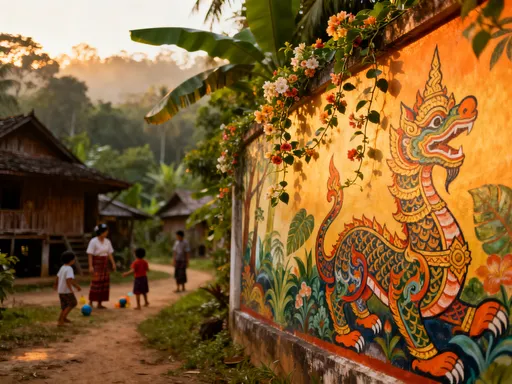
The absence of mass tourism creates space—both physical and emotional—for deeper observation. Without tour groups crowding alleyways or vendors shouting for attention, the city feels like a place that lives for itself, not for the camera. Yet, this very authenticity makes it profoundly photogenic. When people are not performing for tourists, their expressions are real, their movements natural. A woman balancing a basket on her shoulder, a boy kicking a makeshift football, an elder sipping coffee under a frangipani tree—these are the unguarded moments that become powerful images. The slower tempo allows photographers to linger, to wait for the right light, the right gesture, the right silence.
Mindful photography thrives in such environments. Rather than chasing iconic shots, you begin to notice subtleties—the way morning mist clings to the river’s surface, how sunlight filters through a canopy of leaves, or the pattern of cracks in a century-old wall. These details, often overlooked in faster-paced destinations, become the soul of your visual story. Battambang invites you to put down the checklist and pick up patience. It rewards those who walk without a map, who pause without a plan, and who see not just with their eyes, but with their presence.
Sunrise at Phare Ponleu Selpak: Art in Motion
As dawn breaks over Battambang, one place begins to stir with quiet energy—Phare Ponleu Selpak, the renowned arts school founded to support underprivileged youth through creative education. Long before the first tourists arrive, the campus comes alive with the soft sounds of practice: a violin warming up, dancers stretching in open-air studios, painters laying down early strokes on fresh canvases. This is not a performance staged for visitors; it’s the daily discipline of young artists honing their craft. For photographers, it’s a rare window into authentic human expression, where emotion and effort are visible in every gesture.
The morning light spills across rehearsal halls, casting long shadows and highlighting the fluid lines of dancers in motion. Costumes in vibrant reds, blues, and golds catch the glow, transforming ordinary spaces into living stages. Facial expressions tell stories of concentration, joy, and resilience. A young acrobat balances on a beam, muscles tensed; a student sketches under a tree, completely absorbed in her drawing. These are not posed portraits, but candid moments of dedication. The school’s mission—using art as a path to healing and opportunity—adds depth to every image, turning simple photographs into visual narratives of hope and perseverance.
When photographing at Phare Ponleu Selpak, respect is essential. Always ask permission before taking close-up shots, especially of students in rehearsal. A smile, a nod, or a simple hand gesture can go a long way in establishing trust. Many staff members are happy to guide visitors to appropriate viewing areas or photo opportunities that don’t disrupt the learning environment. Avoid using flash indoors, as it can be distracting and disruptive. Instead, embrace natural light and wide-angle compositions that capture the atmosphere of the space. By approaching with humility and care, you not only protect the dignity of the subjects but also create images that carry genuine emotional weight.
Riverside Reverie: Cafés with a View
Along the banks of the Sangker River, a string of relaxed cafés offers more than just good coffee—they serve as perfect vantage points for contemplative photography. Places like Sugar Palm and Little Italy blend local charm with thoughtful design, featuring wooden terraces, shaded seating, and open-air layouts that invite lingering. These spots are ideal for slow observation, where the rhythm of river life unfolds without hurry. Fishermen glide by in long, narrow boats, their nets glistening in the sun. Children laugh as they jump from low docks, and elderly couples sit together, watching the water drift by. Every moment feels unhurried, unhyped, and deeply real.
The river itself becomes a living mirror, reflecting the changing sky and the silhouettes of passing boats. During golden hour—just after sunrise or before sunset—the light turns soft and warm, painting the water in hues of amber and rose. This is the ideal time to capture long exposures that blur the motion of the current, creating dreamlike ripples beneath stationary elements like moored boats or riverside trees. The contrast between stillness and movement becomes a central theme in your compositions. Even on overcast days, the diffused light enhances textures and reduces harsh contrasts, making it easier to balance shadows and highlights in your frame.
To make the most of these riverside settings, arrive in the mid-morning or late afternoon. Midday sun can be too intense, creating blown-out highlights and deep, unflattering shadows. By timing your visit, you align with nature’s best lighting conditions. Use the café’s natural architecture—wooden railings, arches, or hanging plants—as framing devices to draw the eye toward your subject. A wide-angle lens helps capture the full scene, while a prime lens with a wide aperture can isolate intimate details, like steam rising from a coffee cup beside a journal filled with handwritten notes. These small moments, when composed with care, often become the most memorable images.
Old Town Strolls: Colonial Echoes
Wandering through Battambang’s Old Town is like stepping into a sepia-toned photograph. The colonial-era buildings, many over a century old, stand in quiet dignity along quiet streets. Their pastel-colored walls—now faded to soft peach, sage, and powder blue—bear the marks of time in the form of peeling paint, weathered wood, and rusted ironwork. Balconies draped in creeping vines and shuttered windows with intricate latticework add layers of texture and depth. These structures were once homes to French officials and local elites, but today, they house family-run shops, guesthouses, and small studios, their history woven into everyday life.
For photographers, this neighborhood is a treasure trove of visual storytelling. The interplay of light and shadow in narrow alleys creates dramatic contrasts, especially in the early morning when the sun skims at a low angle. Arches and doorways naturally frame scenes, guiding the viewer’s eye toward a distant figure, a blooming flower, or a patch of sunlight on the ground. Reflections in broken windows or puddles after rain add surreal layers to your compositions. The textures of cracked tiles, flaking stucco, and worn door handles invite close-up shots that emphasize the beauty of imperfection—a concept central to mindful photography.
When photographing in Old Town, move slowly and observe carefully. A single block can yield dozens of potential frames if you allow yourself to see beyond the surface. Use a polarizing filter to reduce glare on wet surfaces or enhance the saturation of faded colors. A tripod can help stabilize shots in low-light areas, such as covered walkways or interior courtyards. Most importantly, engage with the present. A shopkeeper arranging fruit, a cat napping on a windowsill, or a child chasing a butterfly—these are the fleeting moments that bring still architecture to life. By capturing both the structure and the life within it, you create images that are not just beautiful, but deeply human.
Bamboo Train and Countryside Glimpses
The bamboo train, or “norry,” is one of Battambang’s most iconic experiences, but it’s best approached not as a thrill ride, but as a moving photo safari. This simple platform of bamboo slats mounted on metal wheels travels along a narrow-gauge railway that cuts through the countryside, offering uninterrupted views of rural Cambodia. As the train clatters forward, the landscape unfolds in quiet beauty—endless rice fields stretch to the horizon, water buffalo graze in muddy ponds, and palm trees sway in the breeze. Children run alongside the tracks, waving and laughing, their joy unfiltered and infectious.
The journey provides a rare opportunity to witness daily life in remote villages. Women kneel by the tracks, selling fresh coconuts or grilled corn. Farmers pause in their fields, looking up with curiosity but not intrusion. The rawness of the setting—the unpaved paths, the hand-built homes, the lack of electricity in some areas—adds authenticity to every frame. This is not a sanitized tourist trail, but a functional transport route still used by locals to carry goods and travel between communities. The train stops at a designated point, allowing passengers to explore a small village or enjoy a simple meal at a family-run stall, further deepening the connection to place.
For photography, a mid-zoom lens (70–200mm) is ideal. It allows you to capture distant scenes—the curve of a rice paddy, a monk walking along a dirt path—without needing to get too close. Respectful distance preserves the integrity of the moment and avoids making subjects feel observed. Shoot in continuous mode to capture motion, such as children running or birds taking flight. Early morning trips offer the softest light and the clearest air, while late afternoon rides bathe the fields in golden tones. Regardless of timing, remember that the bamboo train is a shared space. Be courteous to fellow passengers, keep noise to a minimum, and avoid blocking views. Your presence should be gentle, your lens patient.
Temple Detours: Beyond the Beaten Path
While Angkor Wat draws millions, Battambang’s lesser-known temples offer a different kind of spiritual and photographic experience—one defined by stillness rather than spectacle. Sites like Wat Preah Bat Choan Tep and Wat Ek Phnom stand quietly in the outskirts, surrounded by trees and often visited by only a handful of people each day. These are not grand monuments built for crowds, but sacred spaces where time moves slowly and reverence remains undisturbed. The air is thick with the scent of incense, and the only sounds are the rustle of leaves and the occasional chant from a monk’s chamber.
Wat Preah Bat Choan Tep, perched on a hillside, features a series of cave shrines filled with Buddha statues, some centuries old. Sunlight filters through narrow openings, illuminating golden faces in dramatic chiaroscuro. The contrast between shadow and light creates a meditative atmosphere, perfect for contemplative photography. Wat Ek Phnom, partially in ruins, is draped in roots and moss, its broken towers blending into the jungle. Here, nature reclaims stone, and the passage of time is visible in every crack and crevice. These temples invite you to explore not just with your camera, but with your senses—to feel the coolness of the stone, to hear the echo of footsteps in an empty hall, to witness devotion in its most unadorned form.
When photographing in these sacred spaces, mindfulness is crucial. Dress modestly—cover shoulders and knees—and remove your shoes before entering prayer areas. Avoid using flash, especially near altars or where monks are praying, as it can be disruptive and disrespectful. Instead, use a higher ISO setting or a tripod to capture low-light scenes without artificial light. Focus on details: hands pressed in prayer, a single lotus blossom on an offering table, the texture of ancient carvings softened by centuries of touch. These small elements often carry more emotional weight than wide-angle shots of the entire structure. By honoring the sanctity of the place, you create images that are not just visually compelling, but spiritually resonant.
Local Markets: Color in the Chaos
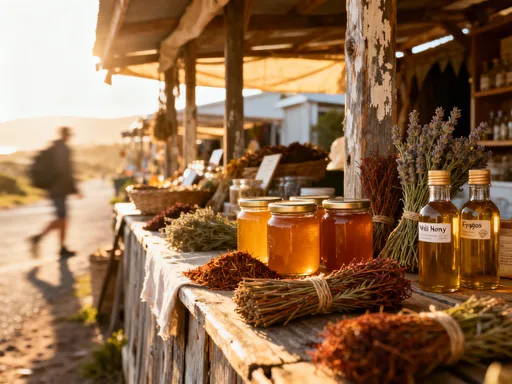
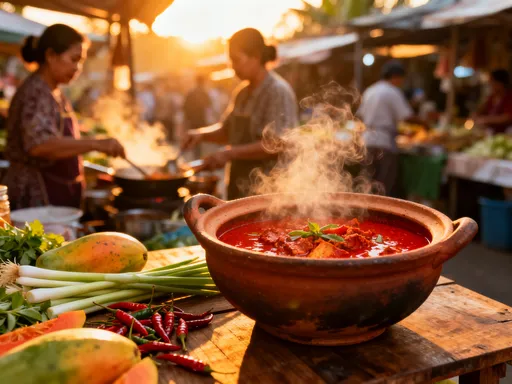
No visit to Battambang is complete without stepping into the heart of its daily life—the central market and morning produce stalls. These bustling spaces are a feast for the senses: the scent of ripe mangoes and grilled fish, the chatter of vendors, the rainbow of fruits, vegetables, and textiles piled high on wooden tables. It’s chaotic, vibrant, and utterly alive. For photographers, the market is a masterclass in color, composition, and human connection. Piles of turmeric, papaya, and dragon fruit create natural still lifes. Woven baskets, clay pots, and hand-dyed fabrics add texture and cultural depth. Even the ice-covered fish and hanging cuts of meat contribute to the raw authenticity of the scene.
Navigating the market with a camera requires both awareness and courtesy. Begin by walking slowly, absorbing the rhythm before raising your lens. A smile or a nod goes a long way in establishing goodwill. If you want to photograph a vendor, point to your camera and pause—most will understand and either nod or gesture for you to proceed. Some may ask for a small fee, which is generally acceptable as a gesture of appreciation. Avoid intrusive close-ups without permission, especially of children or elderly individuals. Instead, use wide-angle lenses to include context—show the vendor within their environment, surrounded by their goods and the flow of customers.
Lighting in the market can be challenging. Midday sun streams through canvas roofs, creating harsh contrasts between light and shadow. Rather than avoiding this, use it to your advantage. Position yourself where light falls dramatically across a display, highlighting a single basket of oranges or a vendor’s hands arranging herbs. The interplay of light and shadow adds depth and mood to your images. Shoot in RAW format to retain flexibility in post-processing, especially when balancing exposure in high-contrast scenes. Early morning is often the best time to visit, when the market is busiest and the light is softer. By approaching the market with respect and an open heart, you capture not just color, but the spirit of community that defines Battambang.
Conclusion
Battambang doesn’t shout for attention—it whispers. Through the lens, its true character emerges in stillness, in shadow, in the unguarded smile of a street vendor. This city rewards patience, inviting photographers to look deeper than postcard perfection. It’s not about capturing everything, but the right moment. When you slow down, the frames find you. Whether it’s the quiet dedication of a young artist, the golden ripple of the Sangker River, or the weathered beauty of a colonial wall, each image becomes a quiet testament to a place that lives at its own pace. Battambang reminds us that the most meaningful photographs are not taken—they are given, offered freely by a place that values presence over performance. So pack your lens, leave the filters behind, and let the city reveal itself, one honest frame at a time.