Why I Finally Got Real About My Mental Health—And What Monitoring Taught Me
I used to think therapy was only for crises—until I realized I’d been ignoring quiet signs of burnout and anxiety for years. Tracking my mental state changed everything. It wasn’t about fixing myself overnight, but seeing patterns, catching stress early, and showing up differently in my life. This is what deep psychological work really looks like when you pair counseling with honest self-monitoring—and why it might be the missing piece in your own wellness journey.
The Breaking Point: When "Fine" Wasn’t Enough
It wasn’t a single event that pushed me to seek help, but a slow accumulation of moments that chipped away at my sense of stability. I’d wake up already exhausted, despite eight hours of sleep. My thoughts would race before my feet even touched the floor—what needed to be done, who I needed to call, which deadline was looming. I found myself short-tempered with my children over small things, like spilled cereal or forgotten backpacks, and then immediately flooded with guilt. These reactions didn’t feel like me, yet they were becoming routine.
What surprised me most was how ordinary it all felt. I wasn’t in crisis, at least not in the way I understood it. There was no diagnosis, no hospital visit, no dramatic collapse. Instead, there was a persistent low hum of tension, like a refrigerator that never shuts off. I told myself I was fine—busy, yes, but fine. And for a long time, that was enough. But eventually, "fine" stopped being a neutral word and started feeling like a mask I wore to avoid admitting I was struggling.
That shift—from seeing mental health care as something reserved for emergencies to recognizing it as a form of preventive maintenance—was crucial. I began to understand that just as I wouldn’t wait for a tooth to rot before seeing a dentist, I shouldn’t wait for emotional pain to become unbearable before seeking support. The decision to start counseling wasn’t a sign of failure; it was an act of responsibility. It meant acknowledging that emotional well-being, like physical health, requires attention and care, even when things seem manageable on the surface.
What Psychological Counseling Actually Is (And Isn’t)
Before I began therapy, I held a number of assumptions about what it would be like. I imagined a silent room, a distant therapist taking notes, and me lying on a couch, digging up childhood traumas I’d rather forget. I thought counseling was for people with serious problems—those who were "broken" in some fundamental way. What I discovered was something entirely different: a space for clarity, reflection, and emotional honesty.
Psychological counseling is not about being fixed. It’s not a medical procedure with a clear endpoint or a guarantee of transformation. Instead, it’s a collaborative process focused on understanding oneself more deeply. A skilled therapist doesn’t tell you what to do or diagnose every feeling as a disorder. Rather, they help you explore patterns in your thoughts, emotions, and behaviors. They ask thoughtful questions, reflect back what they hear, and gently guide you toward insights you might not have reached on your own.
One of the most powerful aspects of counseling is how it helps identify triggers—those subtle or not-so-subtle events that set off emotional reactions. For me, it was realizing that certain types of feedback at work, even when well-intentioned, would spark waves of self-doubt. My therapist didn’t tell me to avoid feedback; instead, we explored why it affected me so deeply and developed strategies to process it without internalizing it as personal failure.
Equally important is the pace of the work. Counseling is not a quick fix. Progress is often slow, nonlinear, and sometimes invisible in the moment. There were sessions where I left feeling heavier than when I arrived, as if I’d opened a door to a room I wasn’t ready to enter. But over time, those moments of discomfort became part of the process. Healing isn’t about constant improvement; it’s about showing up, being honest, and allowing space for complexity.
Why Monitoring Matters: The Data Behind Emotional Awareness
If counseling provided the conversation, monitoring gave me the data. At first, the idea of tracking my mental state felt clinical, even a bit cold. I associated it with spreadsheets and performance metrics, not emotional well-being. But I soon learned that monitoring isn’t about judgment or productivity—it’s about awareness. When we pay attention to our inner experiences with curiosity rather than criticism, we begin to see patterns that were previously invisible.
Research in psychology consistently shows that self-monitoring enhances emotional regulation. By simply observing and recording our feelings, we create a small but vital distance between experience and reaction. This space allows us to respond more intentionally, rather than being swept up in automatic emotional responses. It’s like turning on a light in a dark room—you don’t change the room itself, but you can finally see what’s in it.
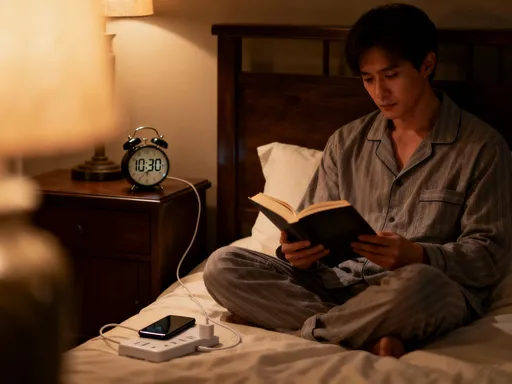
For me, monitoring started with a simple question I asked myself each evening: "How did I feel today, on a scale of 1 to 5, with 1 being overwhelmed and 5 being at ease?" I didn’t need special tools or apps—just a notebook I kept on my nightstand. Over time, I began to notice that my mood dipped consistently on Mondays and Thursdays, which led me to explore what was happening on those days. I also started noting three emotions I experienced each day, which helped me move beyond broad labels like "stressed" or "fine" and into more specific descriptions like "impatient," "hopeful," or "lonely."
This kind of tracking didn’t eliminate difficult emotions, but it changed my relationship to them. Instead of being caught off guard by a sudden wave of anxiety, I began to recognize the early signs—the tightness in my chest, the slight increase in my breathing rate, the tendency to isolate myself. With that awareness came the ability to intervene earlier, whether through deep breathing, a short walk, or reaching out to a friend.
My Monitoring Routine: Simple Tools That Actually Work
One of the biggest misconceptions about mental health monitoring is that it has to be complicated or time-consuming. I tried a few apps early on, but found them overwhelming with their graphs, reminders, and data points. What worked best for me was simplicity. I returned to the basics: a lined notebook and a pen. Each night, before turning off the light, I spent five minutes reflecting on the day.
I developed a short routine: First, I rated my overall mood on a scale of 1 to 5. Then, I listed three emotions I had felt, trying to be as specific as possible. Next, I wrote down one situation that had been emotionally significant—positive or negative—and briefly described how I had responded. Finally, I noted one thing I was grateful for, no matter how small. This last step wasn’t about forced positivity, but about training my attention to notice moments of connection, beauty, or peace, even on hard days.
Sometimes, I used my phone’s notes app when I was traveling or forgot my notebook. The key wasn’t the tool, but the consistency. There were weeks when I missed entries, and that was okay. The goal wasn’t perfection, but presence. Over time, the act of writing became a ritual of self-check-in, a way of saying to myself, "I matter enough to be heard."
One unexpected benefit was how this routine improved my counseling sessions. Instead of arriving and saying, "I don’t know, I’ve just felt off," I could share concrete examples: "Last Tuesday, I rated my mood a 2. I felt anxious and guilty after a meeting where I didn’t speak up. I noticed I avoided my family that evening." This gave my therapist and me something real to work with, turning vague feelings into tangible material for exploration.
How Counseling and Monitoring Work Together
Monitoring and counseling are most powerful when they work in tandem. Think of monitoring as the daily pulse check and counseling as the deeper analysis. One provides the raw data; the other offers the interpretation and context. Together, they create a feedback loop that supports lasting change.
For example, after several weeks of tracking, I noticed a pattern: every Monday, my stress rating spiked. At first, I assumed it was just the "back-to-work" blues. But when I brought this to my therapist, we dug deeper. We explored what specifically about Mondays felt overwhelming—was it the workload, the transition from weekend freedom, the anticipation of meetings? Through conversation, I realized it wasn’t the day itself, but the pressure I put on myself to be productive immediately after two days of rest. I was treating Monday like a race start, not a transition.
With that insight, we developed a small but meaningful shift: I began using Sunday evenings to plan the week with kindness, not pressure. Instead of listing everything I had to accomplish, I asked myself, "What would make this week feel manageable?" I started scheduling one low-demand activity on Monday mornings, like a quiet coffee or a short walk, to ease into the week. These changes didn’t eliminate stress, but they reduced its intensity and gave me a sense of agency.
This synergy—between observing and understanding—transformed how I approached my emotional life. I moved from reacting to feelings as they arose to anticipating and preparing for them. I began to see my emotions not as enemies to be suppressed, but as signals carrying valuable information. Anger might point to a boundary that’s been crossed. Sadness might indicate a need for rest or connection. By listening, I could respond with care rather than fear.
Common Roadblocks—and How to Move Past Them
Despite the benefits, there were times when I wanted to quit monitoring. Life got busy. I forgot. I felt too tired at the end of the day to write anything down. Other times, I avoided it because I didn’t want to face what I might discover. These barriers are real, and they’re common. The key isn’t to eliminate them, but to work with them gently.
Time is often cited as the biggest obstacle. Many women in their 30s to 50s are balancing careers, parenting, household responsibilities, and personal relationships. Adding one more thing can feel like too much. But monitoring doesn’t have to take long. Even two minutes of reflection—asking, "How am I really feeling right now?"—can be enough. Some days, I did my check-in while waiting for the kettle to boil or during a child’s screen time. It wasn’t about duration, but intention.
Stigma, even internalized, can also be a hurdle. There’s still a cultural narrative that strong women handle things on their own, that asking for help is a sign of weakness. I had to reframe monitoring and counseling not as signs of failure, but as acts of strength. Taking care of my mental health wasn’t selfish—it allowed me to show up more fully for my family, my work, and myself.
Emotional resistance is perhaps the most subtle barrier. It’s uncomfortable to face difficult feelings, especially when we’ve spent years avoiding them. When I felt this resistance, I reminded myself that awareness isn’t the same as judgment. Noticing I felt overwhelmed didn’t mean I was failing; it meant I was paying attention. And sometimes, just naming the feeling—"I’m avoiding this because I’m afraid of what I’ll find"—was enough to soften the resistance.
Building a Sustainable Mental Health Practice
The ultimate goal isn’t to fix yourself once and be done, but to build a sustainable practice of emotional care. Just as we brush our teeth daily to prevent cavities, we can develop routines that support mental well-being before problems arise. Counseling and monitoring, when integrated into daily life, become less about crisis management and more about long-term resilience.
For me, this means continuing therapy on a less frequent basis—monthly instead of weekly—as a form of emotional maintenance. It means keeping my journal nearby, not as a record of distress, but as a companion in self-discovery. It means treating my mental health with the same respect I give to my physical health: eating well, moving my body, getting enough rest, and now, tending to my inner world with equal care.
The benefits extend far beyond symptom relief. I’ve noticed improvements in my relationships—I’m more patient, more present, better able to listen without immediately reacting. My focus at work has sharpened because I’m not carrying the weight of unprocessed emotions. Most importantly, I’ve developed a deeper sense of self-trust. I know myself better. I can recognize when I’m pushing too hard, when I need to slow down, when I need to reach out.
Mental wellness isn’t a destination. It’s an ongoing journey, one that requires curiosity, compassion, and consistency. There will always be hard days, unexpected challenges, moments of doubt. But now, I have tools. I have support. And I have the quiet confidence that comes from knowing I’m not alone in this.
When I look back at the woman who thought therapy was only for emergencies, I feel compassion. She was doing her best with the understanding she had. But I’m grateful to the version of me who decided to get real—to monitor, to reflect, to seek help not because I was broken, but because I was worth the effort. If you’re reading this and feeling that quiet hum of exhaustion, that sense that "fine" isn’t really fine, I want to gently invite you to consider your own path. Not with urgency, not with pressure, but with kindness and curiosity. You don’t have to have all the answers. You just have to be willing to begin.